
ABOUT SHODOSHIMA / HISTORY
What kind of island is Shodoshima?
History, Osaka Castle, Pilgrimage & Traditions
Discover the history of Shodoshima.

Shodoshima
:
History
-
Azukijima
It is not clear when the name Shodoshima first came into use. Its earliest written appearance is in Japan's oldest chronicle, the Kojiki. In its island-creation myth, the deities Izanagi and Izanami give birth to Azukijima, also called Onudehime, as the tenth island following the great islands of Japan. The Nihon Shoki also records Emperor Ojin looking across the Seto Inland Sea from a hill as he saw Empress Ehime's ship leave Naniwa for her home province of Kibi. His verse mentions Awajishima and Azukijima. The pronunciation Shodoshima is said to have become established around the middle of the Kamakura period.
-
Sasaki Nobutane
During the Northern and Southern Courts period after the fall of the Kamakura shogunate, Sasaki Saburozaemon Nobutane established a base at Hoshigajo on Shodoshima in 1339. Originally a brave commander who joined Hosokawa Jozen's Northern Court attack on Kyoto, he switched to the Southern Court after taking Osai no Tsubone from Ko no Moroaki, a powerful retainer of Ashikaga Takauji. Nobutane came from Kojima across the sea, where his family was prominent among maritime forces. By joining the pro-Southern Court Kumano naval forces, with their ties to mountain asceticism, he sought to control eastern Seto Inland Sea shipping and block the route from western Japan to Kyoto. Eight years later, in 1347, the Northern Court commander Morouji, Governor of Awaji, attacked with a large army from Awa, Awaji, Sanuki and Bizen. Nobutane surrendered after a month of fighting.
-
Christianity and migration to Shimabara
Christianity reached Shodoshima in 1586. Toyotomi Hideyoshi had granted the island to the Christian lord Konishi Yukinaga in 1585. The following year, Yukinaga invited Gregorio de Cespedes from a seminary in Osaka to preach here. Accounts say that although there had been no Christians on the island, more than 1,400 people converted in under a month, a cross over 15 meters high was erected, Buddhist and Shinto objects were destroyed, and Yukinaga funded a church.
In 1587, Hideyoshi's ban on Christianity ordered missionaries to leave Japan, and by around 1630 the faith had been almost eradicated. Some hidden Christians are thought to have survived despite the persecution. In 1637, believers in Shimabara, Kyushu, rebelled against severe repression. Many peasants died in the Shimabara Rebellion, leaving the southern peninsula devastated. To rebuild it, the shogunate resettled farming families from across Japan, including its directly controlled territory of Shodoshima. This became known as the migration to Shimabara.
Construction of Osaka Castle
Toyotomi Hideyoshi built Osaka Castle in 1583. The Toyotomi family was defeated by the Tokugawa in the Summer Campaign of 1615. In 1620, Tokugawa Hidetada began rebuilding: Hideyoshi's stone walls were buried, and new moats, walls and a castle tower were constructed above them. Tokugawa reconstruction of Osaka Castle began in 1620, proceeded in three phases and was completed in 1629. Stone was shipped from quarries associated with Kuroda Chikuzen-no-kami [Matsudaira Uemon-no-suke] of Fukuoka (Iwaya and Chiburi Island); Todo Izumi-no-kami of Tsu in Ise (Fukuda); Tanaka Chikugo-no-kami of Yanagawa (Ishiba); Hosokawa Etchu-no-kami of Kokura and Kumamoto (Omi); Kato Higo-no-kami of Kumamoto (Kose and Sengen); Nakagawa Naizen-no-sho of Oka (Meburo); Horio Yamashiro-no-kami of Matsue (Obe); and Nabeshima Shinano-no-kami of Saga (Teshima). Historical documents on and off the island support these accounts. Quarry marks remaining on the island also match marks on the stone walls of today's Osaka Castle.
Pilgrimage
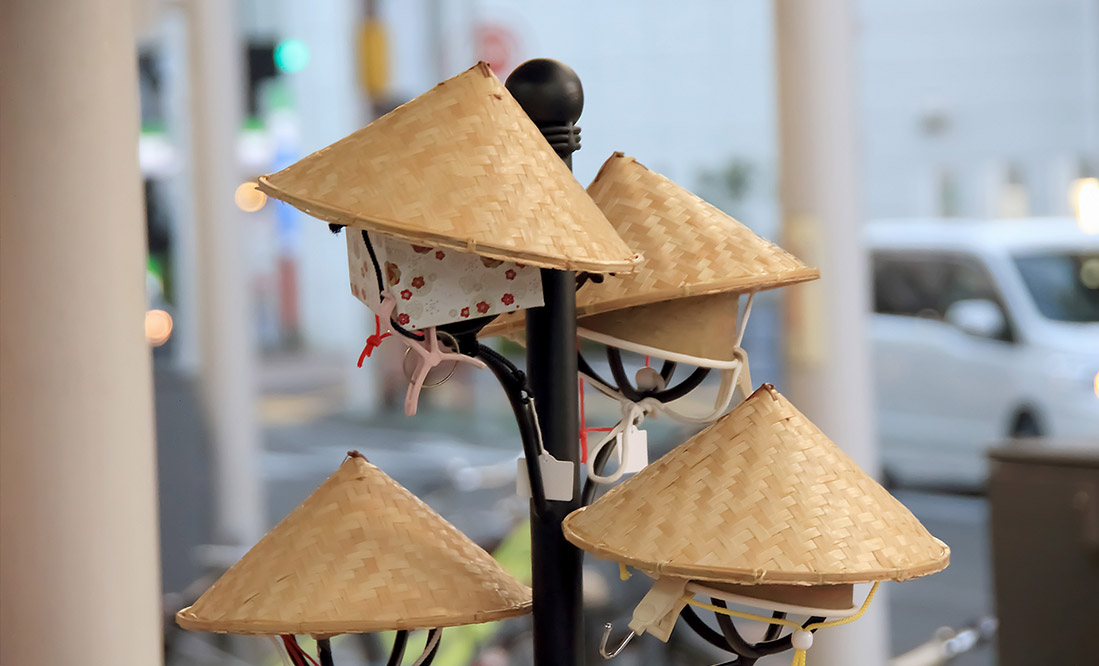
Tradition holds that Kobo Daishi (Kukai) visited Shodoshima while traveling between his native Sanuki and Kyoto, practicing ascetic disciplines and leaving many sacred sites, including rugged caves and hermitages by the shore. The island has also long been home to sacred mountain sites, and ascetics practiced here during the medieval period. Some pilgrimage temples retain hanging bells from the Kamakura period, reflecting their long histories. According to the Shozu District chronicle and other records, Shodoshima's 88-temple pilgrimage was established in 1686, modeled on the Shikoku pilgrimage. Since there were not enough existing temples, new halls and hermitages were built to complete the route. At roughly one-tenth the length of the Shikoku route, it attracts many visitors each year. Islanders welcomed pilgrims with tea, sweets and sweet amazake rice drinks. This tradition of hospitality continues on Shodoshima today..
Local traditions
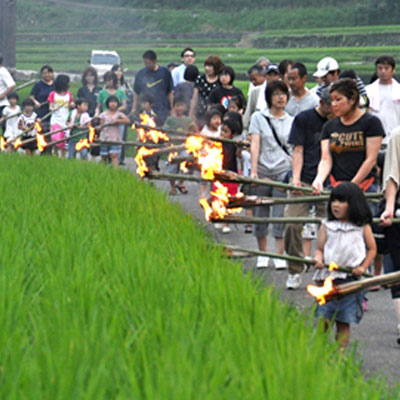
Annual events include Mushiokuri, Kawameshi, autumn festivals and Daishi markets in spring and Shimotsuki (the traditional eleventh month).
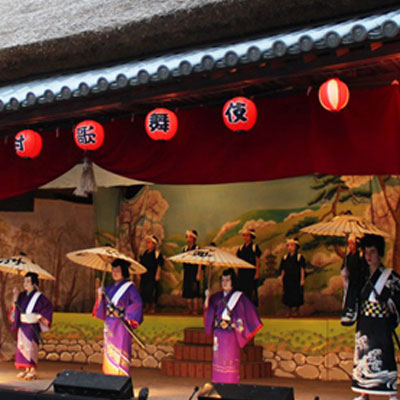
Local performing arts include rural kabuki in Hitoyama and Nakayama, Yasuda Odori, Yasshisshi and Ishibushi.
This description has been carried over from the previous website. Figures with a reference year, including population, relate to that year.